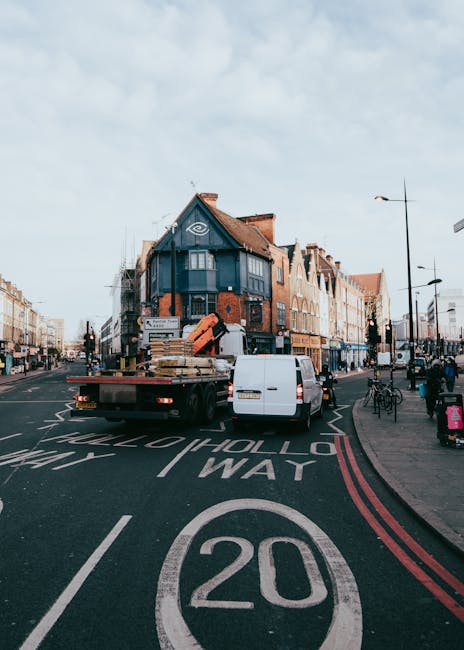
Street Suspension Rules in Putney: Lorry Loading & Fines
If you are planning a removal, delivery, or office move in Putney, street suspension rules can make the difference between a smooth loading slot and a very expensive headache. A lorry parked in the wrong place, at the wrong time, can trigger fines, awkward delays, or a missed move window. And let's face it, nobody wants to start moving day by arguing with signage or chasing a last-minute workaround.
This guide explains Street Suspension Rules in Putney: Lorry Loading & Fines in plain English. You will learn how street suspensions usually work, why they matter for loading vehicles, what can go wrong, and how to plan a compliant, low-stress move. It also covers practical steps for protecting your schedule, your budget, and your back. If you are coordinating a bigger move, you may also find it useful to look at removals, man and van, or moving truck options as part of your planning.
- Why it matters
- How it works
- Key benefits
- Who needs this guidance
- Step-by-step guidance
- Expert tips
- Common mistakes
- Tools and resources
- Law, compliance, and best practice
- Options and comparison
- Real-world example
- Practical checklist
- Conclusion
- Frequently asked questions
Why Street Suspension Rules in Putney: Lorry Loading & Fines Matters
Street suspensions are there to reserve space on the highway for a specific purpose: utility works, filming, road maintenance, removals, or another temporary need. When that happens, parking and loading on the suspended section can be restricted. In a place like Putney, where streets can be tight, traffic can be steady, and loading bays may already be limited, even a small mistake can snowball quickly.
For anyone moving bulky items, the main issue is simple: a lorry needs safe, legal access. If the nearest loading space is suspended, you may have to reposition, arrange alternative access, or change the timing of the move. Ignore the restriction and you risk a penalty, extra loading time, or a vehicle that ends up sitting half in, half out of a constrained bay while everyone around you is trying to get on with their day. Not ideal. Not even close.
These rules matter just as much for businesses as they do for households. A commercial move, office relocation, or furniture delivery can easily go off schedule if the vehicle cannot stop where the team expected. If you are managing a larger job, it can help to compare options such as commercial moves and office removals early, because vehicle size and loading method affect how much street space you need.
Expert summary: in Putney, the safest approach is to treat every loading stop as a planning task, not a last-minute parking decision. Confirm the street position, check for suspension notices, and give yourself more room than you think you need.
How Street Suspension Rules in Putney: Lorry Loading & Fines Works
At a practical level, a street suspension temporarily removes ordinary parking or loading rights from a specific section of road. It may cover one bay, several bays, or a stretch of kerbside. The notice usually tells you the dates, times, location, and reason. Sometimes the sign is obvious; sometimes it is easy to miss when you are concentrating on boxes, trolleys, and a clock that seems to move faster than usual.
For a lorry or removal vehicle, the key question is whether you can legally stop there to load or unload. If the suspension covers the place you planned to use, then stopping may not be allowed even for a short period. That is where people get caught out. A driver assumes that "just five minutes" will be harmless, but enforcement does not usually work on move-day optimism.
Fines or penalty charges can follow where parking or loading breaches the rules. The exact outcome depends on the location, the nature of the restriction, and the circumstances of the stop. It is sensible to assume that if a sign says the space is suspended, you should treat it as unavailable unless you have explicit permission or a lawful alternative arrangement.
The flow is usually straightforward:
- Check the street and the bay before the move date.
- Read the suspension notice carefully, including hours and dates.
- Decide whether your lorry can safely and legally use the area.
- If not, plan a different loading point or a different time.
- Keep the loading operation efficient so the vehicle does not overstay.
For smaller jobs, a removal van or man with van setup may be easier to position than a larger truck. That does not remove the need to check the suspension, though. Smaller does not mean exempt.
Key Benefits and Practical Advantages
Getting suspension checks right is not just about avoiding a ticket. It makes the whole job calmer, cleaner, and more predictable. That sounds obvious, but the difference is noticeable in real life. A move that starts with clear loading access usually finishes faster, with fewer phone calls, fewer awkward pauses, and fewer "hang on, we need to move the truck again" moments.
Here are the practical advantages:
- Lower risk of fines: you avoid the most expensive kind of surprise.
- Better timing: crews can load on schedule instead of circling the block.
- Less physical strain: the shorter the carry, the easier the lift.
- Fewer access disputes: there is less back-and-forth with other road users.
- Cleaner planning for bulky items: sofas, wardrobes, pianos, and appliances are easier to manage.
There is also a less obvious benefit: confidence. Once the access plan is sorted, everyone relaxes a bit. The team can focus on protecting furniture, wrapping awkward corners, and keeping a steady pace. If you are packing at the same time, services like packing and boxes or packing and unpacking services can remove some pressure from the day.
In our experience, customers usually feel the difference most when a move has stairs, a narrow frontage, or limited waiting space. That is where a good loading plan earns its keep.
Who This Is For and When It Makes Sense
This guidance is relevant if you are arranging any sort of loading or unloading in Putney where a lorry, van, or removal vehicle may need to stop on the street. That includes homeowners, tenants, landlords, business managers, and anyone helping a relative move. Truth be told, street suspension issues can catch out the most organised person if they only check the space on the day.
It makes particular sense in these situations:
- House moves: you need a safe place for furniture and boxes.
- Flat removals: access can be tight and time-limited.
- Office relocations: a delay can affect staff, equipment, and building access.
- Student removals: quick turnaround and smaller windows can make loading bays crucial.
- Furniture collection or delivery: one awkward item can still require a proper loading stop.
If you are moving a heavy item like a piano or a long cabinet, the margin for error becomes very small. For those jobs, it is wise to look at piano removals or furniture removals and plan the access first, item second. Otherwise you end up carrying a heavy object further than you expected, which is a fast route to a sore back and a grumpy afternoon.
Step-by-Step Guidance
If you want a clean, low-risk loading process, follow a proper sequence rather than improvising on the pavement. Here is a practical way to handle it.
1. Identify the exact loading point
Do not just assume the nearest kerb will do. Pin down the exact street, side of road, bay, and approach route. In a busy part of London, "around the corner" is not a plan; it is a hope.
2. Check for suspension notices early
Look before move day if you can, and then check again closer to the date. Street restrictions can change with works, special events, or temporary traffic management. If you are arranging a bigger move, the early planning stage is also the right time to compare removal services and vehicle sizes.
3. Match the vehicle to the access
A large lorry may not be the best fit for a narrow or heavily controlled street. A smaller vehicle may be more practical if the access is awkward or if the loading time is short. This is one reason some customers prefer man with a van for compact moves, although the same compliance checks still apply.
4. Create a loading window
Give yourself a realistic buffer. If you only allow the exact amount of time the lift should take, you are already gambling. Allow a little extra for traffic, stair carries, awkward furniture, and the inevitable box that refuses to fit through the door until you turn it sideways. Classic.
5. Protect the route between vehicle and property
Clear obstacles, reserve space where possible, and make sure the team knows the safest path in and out. For home moves, this is often where home moves planning pays off. For business sites, it can be worth preparing internal lift access, reception handling, and destination loading zones in advance.
6. Keep the crew informed
Drivers, loaders, and the person coordinating the move should all know the same plan. A small communication gap can turn into a parking issue very quickly. One person thinks the bay is fine, another has seen a suspension sign, and now the clock is ticking.
7. Have a fallback option
If the reserved space is suspended or blocked, decide in advance what you will do next. That might mean a different bay, a different vehicle, or a short wait while the team loads from a legal position. For longer or staggered moves, storage can also help reduce pressure and split the job into manageable parts.
Expert Tips for Better Results
A good move is rarely about one big trick. It is usually a dozen small decisions made sensibly. These are the details that tend to save the day.
- Take photos of the suspension sign: if there is ever a question later, you have a record of what was displayed.
- Measure your vehicle footprint: long wheelbases and overhanging tails can create access problems even when the bay looks usable.
- Build in a parking margin: do not plan for a space that is just barely wide enough.
- Use the light of day where possible: early morning loading is often easier to assess visually than late evening loading.
- Separate essentials: keep documents, keys, and small items apart from the main load so a delay does not disrupt everything.
If the move is business-critical, speak to a provider that understands local access pressure and timing. A team used to office relocation services or commercial moves is usually better prepared for loading complications than someone treating it like an ordinary stop-and-shift job.
One more thing: do not be embarrassed to over-prepare. That is not overkill; that is competence.
Common Mistakes to Avoid
Most fines and delays are caused by predictable mistakes. The good news is that they are easy to avoid once you know what to look for.
- Assuming the bay is usable because it was free yesterday. Suspensions can start and end quickly.
- Reading only part of the sign. Time windows matter, and sometimes restrictions apply only at certain hours.
- Planning for the vehicle, not the item. A sofa may fit the van, but the street access might still be wrong.
- Forgetting about unloading at the destination. A smooth departure means little if the receiving end is also restricted.
- Leaving loading to the last minute. When you rush, you make worse decisions. Simple as that.
Another common issue is choosing a service that is too small for the job or too large for the street. A bigger truck can be efficient, but if access is tight, it can create more risk than value. If you are comparing vehicle options, pages like removal truck hire and removal van may help you decide what fits the plan, not just the item list.
And yes, people do occasionally discover the suspension only after they have already parked. Nobody enjoys that moment. It has a very specific kind of silence to it.
Tools, Resources and Recommendations
You do not need a complicated setup to stay organised. A few practical tools make a big difference.
| Tool or resource | What it helps with | Why it is useful |
|---|---|---|
| Printed move plan | Timing, contacts, access notes | Useful if phone signal drops or multiple people are involved |
| Photos of the street sign | Confirmation of suspension details | Helps reduce confusion if the display changes |
| Vehicle dimensions | Space planning | Stops you choosing a vehicle that is awkward for the street |
| Floor plan or access notes | Route planning | Makes loading and unloading more efficient |
| Insurance and safety paperwork | Risk control | Useful reassurance if a job is complex or high value |
For many customers, the best recommendation is also the simplest: ask the removal team to think about access, not just transport. A good provider should be comfortable discussing building entry, vehicle positioning, and sensible scheduling. You can explore related support through flat removals, house removals, or student removals depending on your situation.
It is also worth checking business information pages such as insurance and safety and health and safety policy if you want more reassurance around how the work is handled.
Law, Compliance, Standards, or Best Practice
Street suspensions and loading restrictions are part of wider highway management and parking enforcement practice in the UK. The exact rules depend on the local authority, signage, and traffic management in place at the location. Because of that, the safest approach is not to rely on habit or hearsay. Read the signs as they appear on the street and plan around them.
From a best-practice perspective, there are a few principles that matter every time:
- Do not assume a loading exemption. If the street is suspended, ordinary loading may not be allowed.
- Use clear records. Keep notes on access arrangements, timings, and any instructions given.
- Respect other road users. Even if you are under time pressure, a blocked road or obstructed pavement is a real issue.
- Plan for vulnerable points. Narrow roads, single yellow lines, and timed restrictions all create extra risk.
If the move is tied to a contract, building management rule, or key handover, it is sensible to read the terms and conditions of the service you choose as well. That helps set expectations around timing, access, and any limitations. For payments and booking clarity, payment and security is another useful page to review.
Where uncertainty exists, the right move is to slow down and verify. A five-minute pause is almost always cheaper than a penalty and a rebooked crew.
Options, Methods, or Comparison Table
There is no single loading method that suits every Putney street. The best choice depends on vehicle size, time pressure, road layout, and whether the access point is suspended. Here is a simple comparison to help you think it through.
| Approach | Best for | Pros | Trade-offs |
|---|---|---|---|
| Large lorry with planned street loading | Big house or commercial moves | Efficient for heavy or bulky loads | Needs more space and tighter compliance checks |
| Removal van or smaller vehicle | Flats, student moves, compact jobs | Easier to position, usually more flexible | May require more trips |
| Staged move with storage | Complex moves with restricted access | Reduces pressure on a single loading window | Needs more coordination and planning |
| Team-based loading with packing support | Busy homes or office relocations | Speeds up handling and reduces mistakes | Requires everyone to follow the same access plan |
For many people, the "best" option is the one that reduces risk rather than the one that looks most efficient on paper. A slightly smaller vehicle and a calmer loading plan can beat a grand plan that ends with a fine. Happens more often than you would think.
Case Study or Real-World Example
Imagine a family moving out of a Putney flat on a Friday morning. The plan is to load a medium-sized vehicle directly outside the building because the lift is small and the sofa is awkward. On the day before the move, the driver checks the street and notices that the closest loading bay is suspended for temporary works. That is annoying, but it is also useful information.
Instead of turning up and hoping for the best, the family adjusts the plan. They choose a smaller vehicle, move the start time slightly earlier, and arrange for a shorter carry from a legal loading point nearby. They also keep the most important items separated, so the essentials can come off first if needed. The move is still busy - there is always some chaos, let's be honest - but it stays controlled.
The real lesson is not that everything went perfectly. It is that the suspension was spotted early enough to prevent a conflict, a delay, or a fine. That one check saved the day. Quietly, but properly.
If you are dealing with a similar move, packing and unpacking services can help reduce the pressure on the loading window, while same day removals may be worth exploring if your timing is already tight and you need a very fast turnaround.
Practical Checklist
Use this checklist before loading day. It keeps the boring mistakes out of the way, which is exactly where they belong.
- Confirm the exact street, bay, and entrance point.
- Check whether any suspension or temporary traffic notices apply.
- Match the vehicle size to the access space.
- Set a realistic loading window with a buffer.
- Prepare a fallback loading point if the first option is restricted.
- Share the plan with drivers, loaders, and the person in charge.
- Take photos of any relevant street signage.
- Keep valuables, documents, and essentials separate.
- Review service terms, insurance, and safety information.
- Allow time for the return journey or second drop if needed.
If you are moving from a shared building or a larger property, it can also help to speak with your provider about the best vehicle and timing combination. A service like house removalists may be a good fit if you want more hands-on support with planning and heavy lifting.
Get a free quote today and see how much you can save.
Conclusion
Street suspension rules in Putney are easy to underestimate, right up until they affect your loading bay. Once you understand how they work, the whole process becomes much easier to control. Check the signs, think ahead, choose the right vehicle, and leave yourself room to adapt. That is the difference between a controlled move and a costly scramble.
Whether you are handling a house move, an office relocation, or a one-off furniture delivery, the same principle applies: good access planning saves time, reduces stress, and lowers the chance of fines. Not glamorous, maybe, but very effective.
And on a practical level, that kind of calm preparation is what makes moving day feel manageable. One sensible decision at a time.
Frequently Asked Questions
What are street suspension rules in Putney?
They are temporary restrictions that remove normal parking or loading access from part of a street. In Putney, this can affect where a lorry or removal vehicle can stop to load or unload.
Can I still load a van if the bay is suspended?
Not automatically. A suspended bay is usually treated as unavailable, even for loading. You should read the signage carefully and avoid assuming that a short stop will be allowed.
Do street suspension fines apply to removal vehicles too?
Yes, they can. The type of vehicle does not remove the restriction. If the stopping place is suspended, the vehicle may still be subject to enforcement.
How far in advance should I check for suspensions?
As early as possible, then again close to the move date. Temporary restrictions can change, so one early check is helpful but not always enough.
What is the safest vehicle choice for a restricted Putney street?
It depends on the road width, loading distance, and item size. Sometimes a smaller vehicle is safer and easier to position than a larger lorry, especially where space is tight.
Do I need special permission to stop outside my property?
Sometimes, yes. It depends on the restriction in place and whether the street is suspended or otherwise controlled. Always verify the exact rules for the location.
What should I do if the planned loading point is suspended on moving day?
Use your fallback plan. That may mean moving to a different legal loading spot, adjusting the vehicle position, or changing the loading sequence so the move still works safely.
Are fines the only risk, or can delays be a problem too?
Delays are a major risk. Even if a penalty is avoided, poor access can slow the move, increase labour time, and create unnecessary stress.
Is a short loading stop ever acceptable during suspension?
Do not rely on that assumption. Some restrictions are strict, and a short stop can still be an issue. The sign on the street is what matters.
How can I reduce the chance of mistakes?
Take photos of signs, check the exact location in advance, allow a time buffer, and keep everyone informed. A written move plan helps too, especially for larger jobs.
Do packing services help with loading restrictions?
Yes. Faster, more organised packing can shorten the loading window, which is useful when street access is limited or tightly timed.
Where should I start if I am planning a move in Putney?
Start with access. Before you book the vehicle, check where it can legally stop, how long loading will take, and whether any street suspension could affect the plan. Once that is clear, the rest gets much easier.